

For the most part, this blog is about how to reduce your own personal contribution to big environmental problems like climate change by leading a less wasteful life. This post is about adapting to it.
Here in Seattle, we experienced an awful heat wave in 2020 (in addition to everything else that was awful that year) and the temperature broke 100 inside the city for the first time that I can remember. Our AC was straining to keep the house at a tolerable temperature, I was scrambling to water all of my plants to keep them alive, and I turned on every humidifier we own. We put our kids to sleep in the basement to escape the heat upstairs. After that, I started thinking about what I could do to get through events like this in the future.
I looked at awnings (too expensive), increasing the tree canopy around my house (free and in progress, thanks to my douglas fir tree nursery), and finally replacing the roof. I was already aware my roof only had a few years left in it, and decided to look at whatever could help keep us cool.
When it comes to keeping your house cool in hot weather, your roof can make a significant difference. New innovations in roofing allow them to reflect more sunlight, resulting in a cooler house in the summer. Beyond keeping you comfortable and saving energy, a cool roof helps reduce the heat island effect. This is an obvious choice if you live in a hot climate like the American Southwest, but with our climate rapidly heating up, it can make a difference in the North as well.
Most contractors in Seattle were less than enthusiastic about cool roofs since it doesn’t’ really help about 8 months out of the year. In addition, a lot of companies (like Owens Corning) offer cool roofs in other states but not Washington. After some looking around, I was able to find someone who offered a couple of choices. I ended up settling on Silverwood Vista AR, from Malarky.

This is a rather remarkable product. It’s partly made from upcycled tires and plastic bags, and includes smog reducing granules from 3M which photocatalytically convert nitrogen dioxide (the asthma-causing air pollutant popularly known as NOX), resulting in runoff from your roof that acts as a nitrogen fertilizer – a double benefit if you have rain barrels.
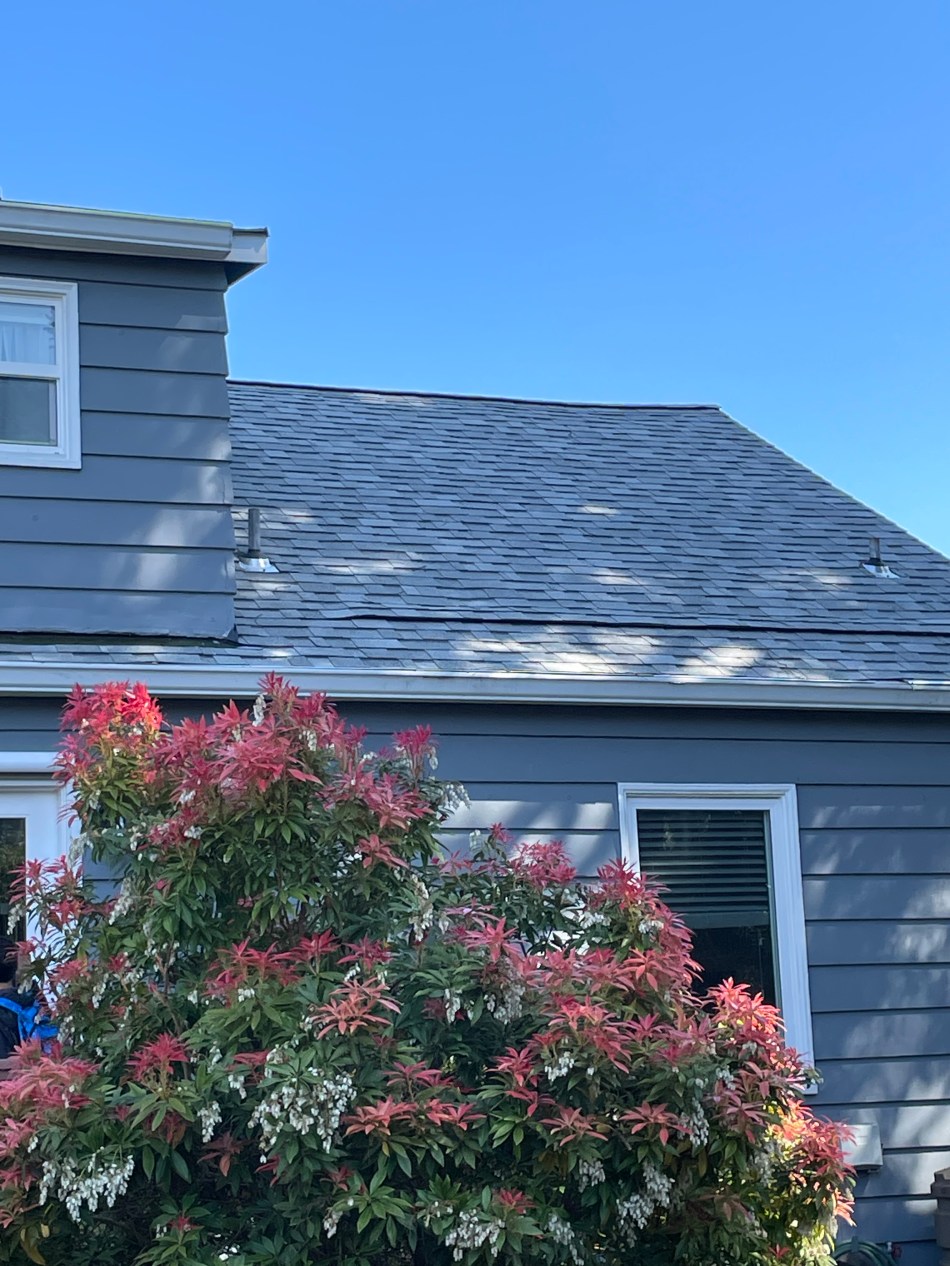
I was concerned that the roof would look odd in a neighborhood with mostly cool colors. It does look a bit bright in some of the pictures. But now that it’s up, I think it looks great. It fits in nicely with the color of my house on cloudy days, and only looks bright in hot sunshine – which is exactly when it’s doing its job.
 greenfyi.com
0 comments on “Getting a new roof? Think about one that will keep you cool”